News Story
Shihab Shamma is PI on €3.3M European Research Council Advanced Grant
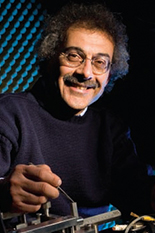
Professor Shihab Shamma (ECE/ISR) is the principal investigator on a five-year, €3.3M project funded by the European Research Council’s (ERC) Advanced Grants Program.He is working with the Ecole Normale Supérieure and co-PI Daniel Pressnitzer, a researcher at the Laboratoire Psychologie de la Perception of the Centre National de la Recherché Scientifique.
“ADAM: The Adaptive Auditory Mind” experimentally investigates a radically novel view of hearing, where active hearing emerges from a deep interplay between adaptive sensory processes and goal-directed cognition.
Abstract
Listening in realistic situations is an active process that engages perceptual and cognitive faculties, endowing speech with meaning, music with joy, and environmental sounds with emotion and urgency. Through hearing, humans and other animals navigate complex acoustic scenes, separate sound mixtures, disentangle messages, and assess their behavioral relevance. These remarkable feats are currently beyond our understanding and far exceed the capabilities of the most sophisticated audio engineering systems. The goal of the proposed research is to investigate experimentally a radically novel view of hearing, where active hearing emerges from a deep interplay between adaptive sensory processes and goal-directed cognition. Our objective is to integrate cognitive function as an intrinsic part of sensory processing, amenable to neurophysiological investigation. Specifically, we shall explore the postulate that active and versatile perception is mediated by a rapid adaptive process at the neuronal level (here called rapid-plasticity). At the conjunction of sensory and cognitive processing, rapid-plasticity pervades all levels of auditory system, from the cochlea up to the auditory and prefrontal cortices. Exploiting fundamental statistical regularities of acoustics, it is what allows humans and other animal to deal so successfully with natural acoustic scenes where artificial systems fail.
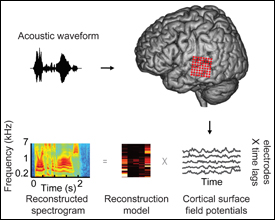
The project builds on the internationally recognized leadership of the PI in the fields of physiology and computational modelling. The PI has pioneered the discovery of rapid-plasticity in neurons of the auditory cortex. He has developed over the years a neuromimetic model of auditory processing that has led to technological breakthroughs and real-world applications. The project also relies on the expertise of the Co-Investigator, who has developed powerful new psychophysical paradigms to probe active hearing in humans. Building on these highly complementary fields and several technical innovations (stimulus reconstruction from large-scale neural recordings in freely behaving animals; “behavioural-clamp”), we hope to promote a novel view of auditory perception and cognition. We aim also to contribute significantly to translational research in the domain of signal processing for clinical hearing aids, given that many current limitations are not technological but rather conceptual. The project is tightly integrated within the local scientific community, with strong support from multiple institutions of excellence. It will result in the creation of laboratory facilities and an intellectual network unique in France and rare in all of Europe, combining cognitive, neural, and computational approaches to auditory neuroscience. A challenge that the PI is eager to endorse is to make this laboratory a magnet for younger scientists and a world-class hub for future projects at the intersection between neuroscience and cognition.
About ERC Advanced Grants
ERC Advanced Grants allow exceptional established research leaders of any nationality and any age to pursue ground-breaking, high-risk projects that open new directions in their respective research fields or other domains. The ERC Advanced Grant funding targets researchers who have already established themselves as independent research leaders in their own right.
Published March 1, 2012
Related Stories
Stories / December 15, 2010
Shamma selected as Blaise Pascal International Research Chair
Stories / September 25, 2018
NSF funds Shamma, Espy-Wilson for neuromorphic and data-driven...
Stories / April 10, 2018
Maryland researchers develop computational approach to...
Stories / November 21, 2017
Shihab Shamma elected IEEE Fellow
Stories / May 8, 2017
Fritz, Shamma are collaborators on new DARPA Targeted...
Stories / March 5, 2015
Shihab Shamma named to NIH advisory council
Stories / April 16, 2014
UMD neuroscience researchers publish in the journal Neuron
Stories / March 28, 2014
Yin, Fritz, Shamma publish neuroplasticity study in Journal of...
Stories / March 7, 2013
‘Cocktail party effect’ helps us focus in noisy environments
Stories / February 2, 2012
Researchers publish human auditory system study in PLoS Biology